01
The range at a glance
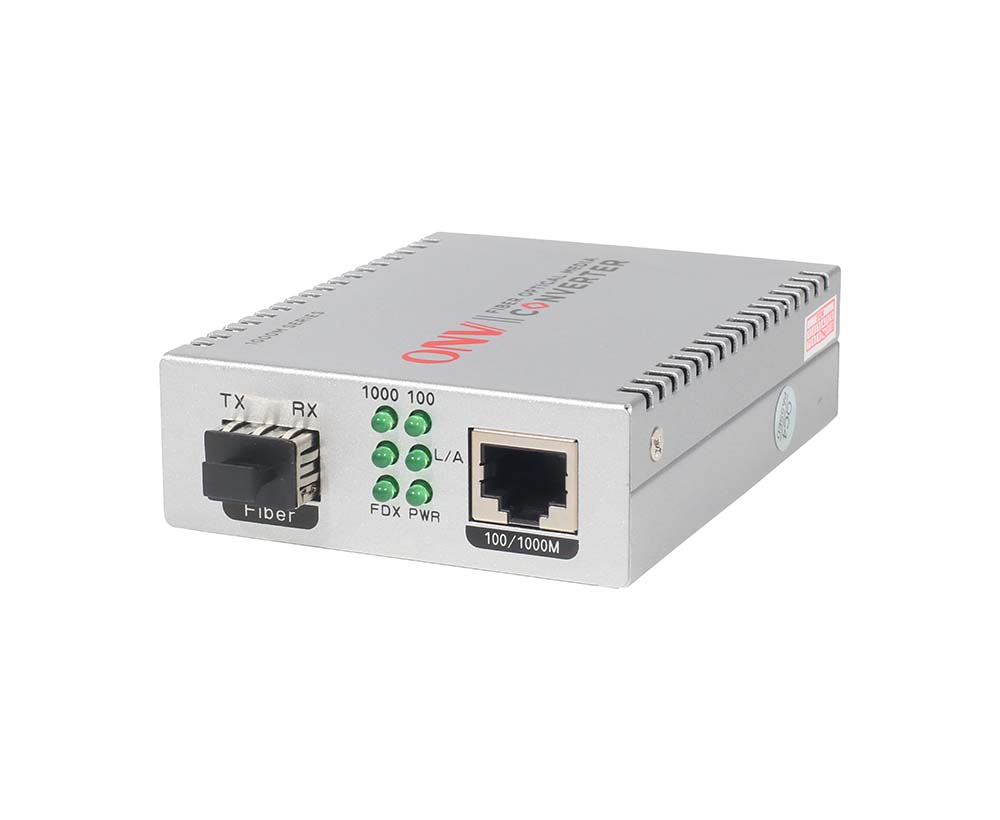
The request is universal: a camera on a gate 400 metres away, powered and connected on one design. Fiber solves the data half perfectly and the power half not at all — glass carries no current. So a PoE-over-fiber link is built from parts, and the honest engineering is in choosing which part goes where. ONV's catalogue supplies every element: fiber media converters for the link, PoE injectors to add power, PoE switches at either end, and extenders for the copper tail.
Pattern one — power at the far end, locally: converter at each end, and at the far end a short copper hop through a PoE injector (or a compact PoE switch) powered by a local supply. This suits sites with any far-end power source. Pattern two — the far end is a powered device on a short leash: the converter lands in a cabinet whose PoE switch powers the last ≤100m of copper. Pattern three — no far-end power at all: the link design changes (power is run separately, or the device moves). What we will not do is pretend a converter passes PoE through glass; the configurations above are the real, quotable builds, and our team confirms the exact bill of materials per project against the devices' power classes.
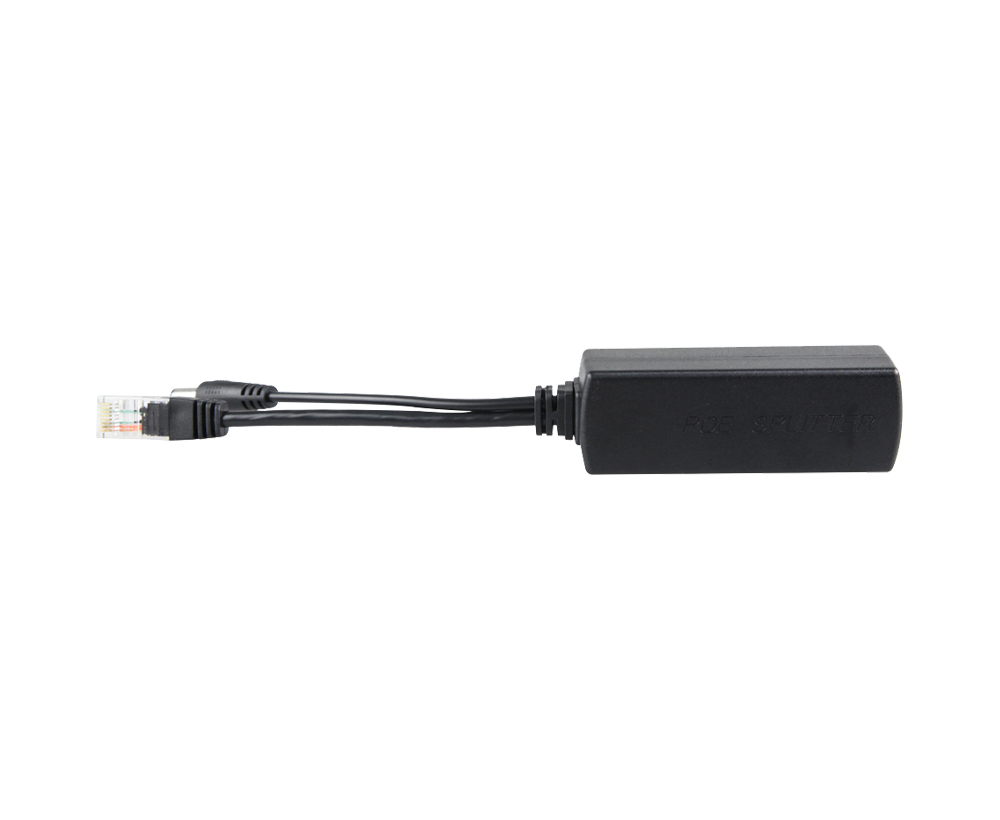
The building blocks: gigabit converters and PoE injectors from the official catalogues.
| Model | Official product name |
|---|
| ONV1110-SLX-F | Gigabit 2-port single-mode dual fiber media converter |
| ONV1110-SLX-S4 | Gigabit 5-port single-mode dual fiber media converter |
| ONV1110S-SCX-O-A3 | Gigabit 2-port single-mode single fiber media converter |
| ONV1110-SCX-K | Gigabit 2-port single-mode dual fiber media converter |
| ONV1110-SCX | Gigabit 2-port fiber media converter board |
| ONV-PSE3301DCS | Gigabit PoE injector |
| ONV-PSE3401G | Gigabit single-port BT PoE injector |
| ONV-PSE3101DC | 10/100M 2-port PoE injector |
| ONV-PSE1301AC-60 | Gigabit single-port non-standard PoE injector |
| ONV-PSE1101AC-60 | 10/100M single-port non-standard PoE injector |