Guide · Comparison
Neither is 'better' — they are answers to different operating models. This guide compares what each tier actually does, what it costs you in money and attention, and the five questions that settle the choice.

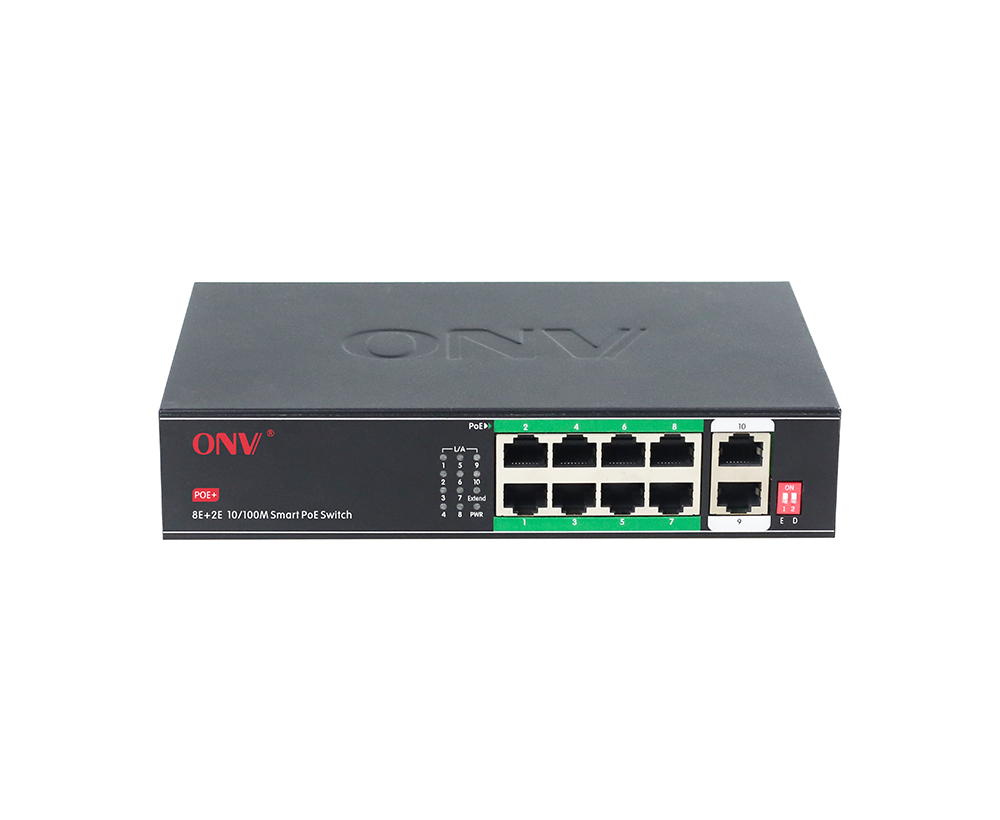
An unmanaged PoE switch forwards traffic and delivers power with zero configuration — including, on ONV's smart models, hardware-switched extras like 250-metre mode, port isolation and the PoE watchdog. A managed PoE switch adds a control plane: a web interface (and usually SNMP and a console) exposing VLANs, QoS, link aggregation, ring redundancy, traffic monitoring and per-port PoE control including remote restart and scheduling. Between them sit Easy managed models with a light interface for port and PoE basics.
The costs run both ways. Managed switches cost more per port and demand someone who will actually use the interface — an unmanaged network cannot be misconfigured, and a managed one nobody logs into is just an unmanaged one with a password sticker. The operating model decides: if the network is installed once and touched never, unmanaged (with watchdog recovery for the one fault that matters) is the rational buy. If the network is segmented, monitored, maintained under contract or expected to change, managed pays for itself the first time an operator restarts a camera port from a desk instead of a ladder. Scale pushes the same way: past a few dozen ports or a second site, central visibility stops being optional.
The two tiers side by side: managed L2+ models and smart unmanaged models from the catalogue.
| Model | Official product name |
|---|---|
| ONV-POE33018PFM | Gigabit 18-port L2+ managed PoE switch |
| ONV-POE33026PFM | Gigabit 26-port L2+ managed PoE switch |
| ONV-POE33006PFM | Gigabit 6-port L2+ managed PoE switch |
| ONV-POE33020PFM | Gigabit 20-port L2+ managed PoE switch |
| ONV-POE33028PFM | Gigabit 28-port L2+ managed PoE switch |
| ONV-H1064PLD | 10/100M 6-port smart PoE switch |
| ONV-POE31004PLD | 10/100M 5-port smart PoE Switch |
| ONV-POE33032PL | Gigabit 3-port PoE switch |
| ONV-H3064P | Gigabit 6-port PoE switch |
| ONV-H3108P | Gigabit 10-port PoE switch |
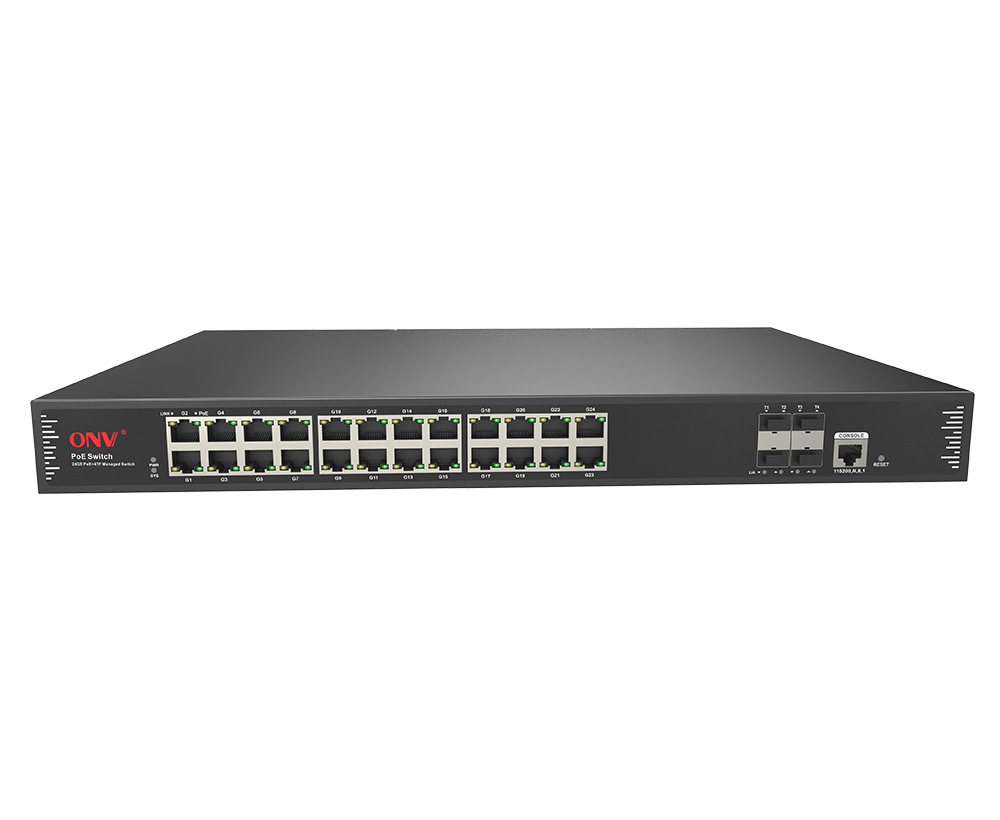
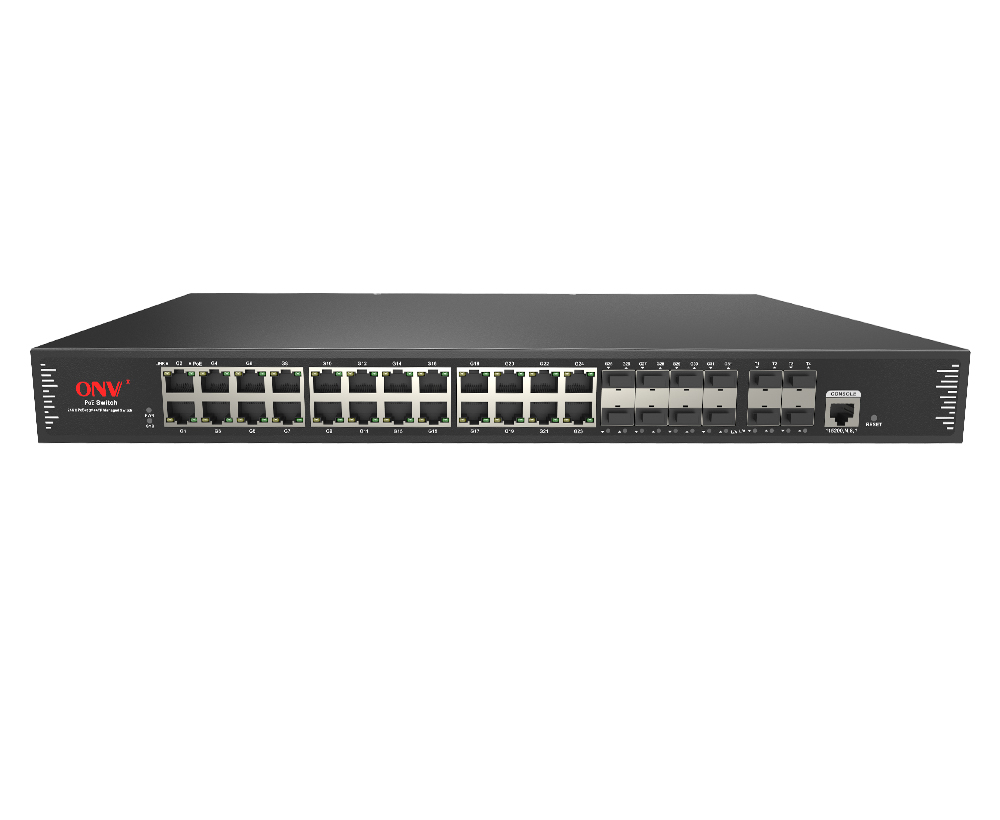
The managed end of the spectrum: the ONV-POE56052PFM — L2+ management with console port, 48 PoE ports, 10G uplinks. Compare its datasheet with the unmanaged featured model on the what-is-a-PoE-switch guide to feel the tiers' distance.
| Parameter | Datasheet value |
|---|---|
| PoE ports | Port 1–48, IEEE 802.3 af/at |
| Max power per port | 30W |
| Uplinks | 10G uplink ports (52 ports total) |
| Switching capacity | 216 Gbps (non-blocking) |
| Forwarding rate | 131 Mpps @64byte |
| MAC address table | 32K |
| Buffer memory | 16M |
| Console | 1 × RS232 console port |
| Standards | IEEE 802.3 / 802.3u / 802.3ab / 802.3z / 802.3ae 10GBase-LR/SR / 802.3x |
Five questions settle it. (1) Must camera, office and guest traffic be segmented? → managed (VLANs). (2) Will anyone monitor the network or need alerts? → managed (SNMP). (3) How are frozen cameras recovered — automatically, remotely, or by visit? → watchdog-unmanaged, managed, or either respectively. (4) Does any path need ring redundancy? → managed. (5) Will the network change shape within its life? → managed. All five 'no' is a genuine unmanaged design; any 'yes' prices the managed tier.
Both tiers are stocked across the ONV range — port counts 4 to 52 in each — so the tier decision never forces a compromise on size or power. Send us your answers to the five questions and we will quote the tier that fits, not the tier that costs more.
The switches are hardware — upgrading means replacing them. But the tiers coexist: a managed core with unmanaged edge switches is a common, sound design, so an unmanaged start is rarely wasted.
It has an interface, so it has credentials to manage — change defaults, restrict management to its own VLAN. An unmanaged switch has no interface to attack but also none to audit with. For camera networks, segmentation (managed) is usually the larger security win.
Send your port count, per-port power and uplink requirements — we reply with the exact models, datasheets and a quotation. MOQ and lead time are confirmed per model and order scope in the quotation.
Both tiers in the checklist.