PoE Devices · Extender
A PoE extender is a repeater that lives on the cable: powered by the PoE it passes on, it regenerates data and power for the next 100-metre hop — and can feed several devices at the far end.

Where the long-distance switch trades speed for reach, the extender trades a small box for distance: placed at the 100-metre mark (powered by the incoming PoE — no local supply needed), it repeats the signal for another full hop, and hops can chain. ONV's extender models in the PoE Devices catalogue are 3-port and 4-port units — one uplink in, multiple powered ports out — in 10/100M and gigabit versions, so the far end of a long run can feed a small cluster (two cameras and an AP, say) rather than a single device.
Budget discipline is the extender's one law: every hop and every far-end device draws from the original switch port's budget, minus losses. The designs that fail are the ones that forget this arithmetic; the power budget guide works it through.
Extender models from the PoE Devices catalogue (official product names).
| Model | Official product name |
|---|---|
| ONV-PSE-PD3321 | Gigabit 3-port PoE extender |
| ONV-PSE-PD3121 | 10/100M 3-port PoE extender |
| ONV-PSE-PD3121S | 10/100M 3-port PoE extender |
| ONV-PSE-PD3121L | 10/100M 3-port PoE extender |
| ONV-PSE-PD3302S | Gigabit 3-port PoE extender |
| ONV-PSE-PD3304 | Gigabit 4-port PoE extender |
| ONV-PSE-PD3102 | 10/100M 3-port PoE extender |
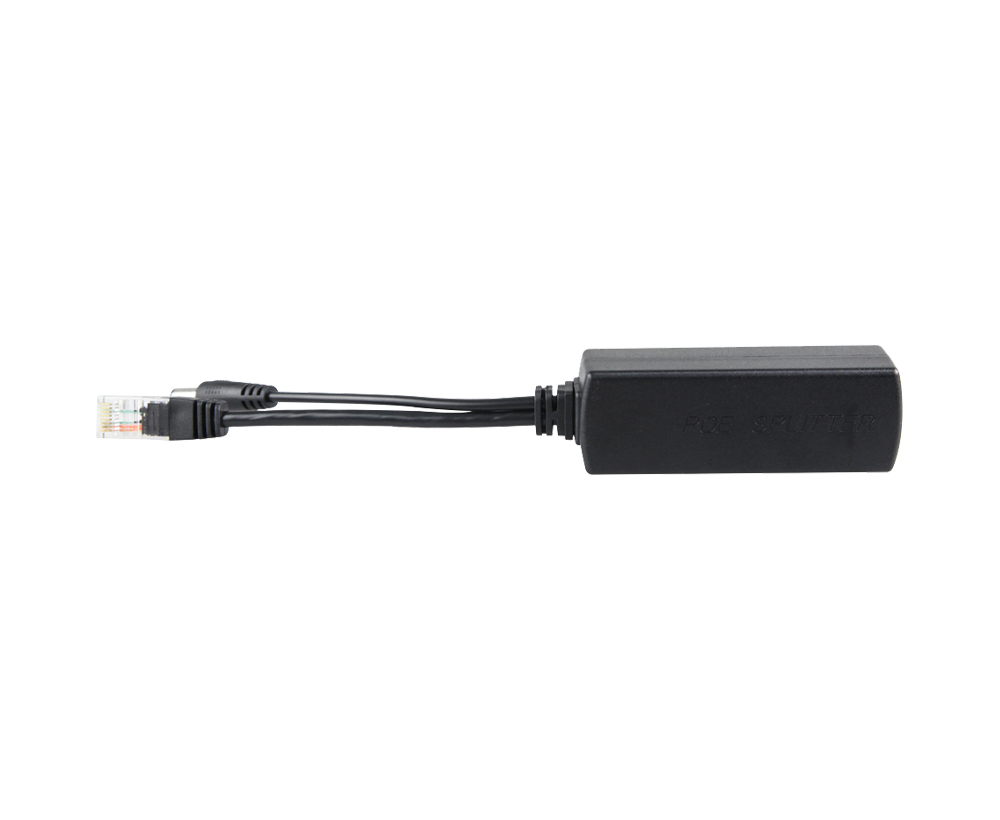
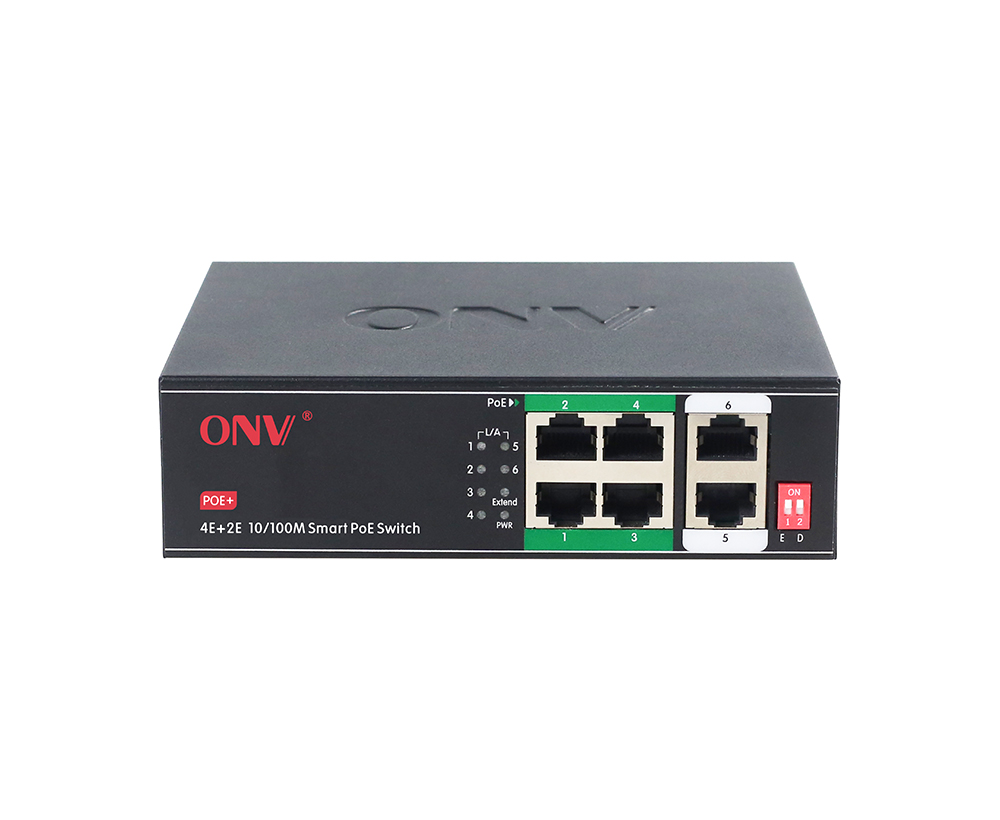
The ONV-PSE-PD3304: a gigabit 4-port PoE extender — 12 Gbps switching capacity, 30W per port class — that turns one long run into a small powered cluster at the far end.
| Parameter | Datasheet value |
|---|---|
| PoE ports | 4 × 10/100/1000Base-T PoE ports, IEEE 802.3 af/at |
| Max power per port | 30W |
| Switching capacity | 12 Gbps (non-blocking) |
| Forwarding rate | 7.4 Mpps @64byte |
| MAC address table | 2K |
| Buffer memory | 2M |
Extender vs long-distance switch vs fiber is a three-way decision. One or two devices at 100–300m: extender hops are cheapest and need no far-end power. Many devices on long runs from one cabinet: the 250m long-distance switch class. Beyond ~300m, or gigabit-class bandwidth needed end to end at distance: fiber with a converter, and power solved at the far end. The distance guide in the blog compares the three with numbers.
Long driveways and perimeters, warehouse aisles, multi-drop corridors, legacy sites where re-cabling is not an option.
Each hop costs power and adds a failure point; practical designs stay to two or three hops. Beyond that, fiber is the honest answer.
No — it is powered by the PoE it repeats, which is precisely its purpose. That is also why the source port's budget must cover the extender plus everything beyond it.
Send your port count, per-port power and uplink requirements — we reply with the exact models, datasheets and a quotation. MOQ and lead time are confirmed per model and order scope in the quotation.
All three fixes compared.
Power without repeating.