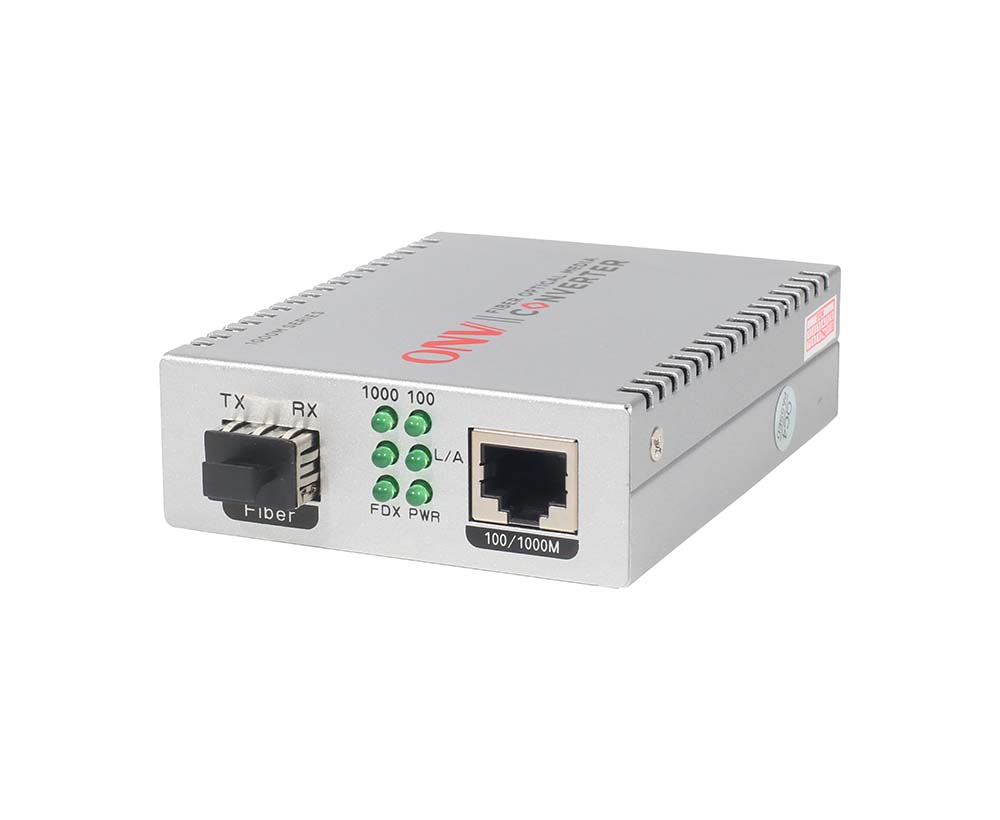
Wireless Line · 8 Models
Across a yard, a road or a river, trenching is the budget-killer. ONV's outdoor wireless bridges carry the link through the air — up to 5 km, 300 Mbps class, powered by PoE.

A wireless bridge is a pair of outdoor radios that behave like a cable: point-to-point between two buildings, or point-to-multipoint from one hub to several outposts. The ONV wireless catalogue counts 8 models — 5.8G and 2.4G outdoor bridges in the 300 Mbps class, gigabit wireless routers, Wi-Fi 6 ceiling and wall-plate access points, and an AC gateway — a small line aimed at the links around a PoE network rather than at carrier wireless.
Bridges and PoE belong together: the radio on the pole is powered by the same PoE infrastructure that powers the cameras beside it (the featured bridge runs on 24V PoE), and the cabinet at each end is typically an ONV PoE or industrial switch. The honest constraint is line of sight: a bridge needs a clear path, and its 5 km headline assumes one.
The wireless bridge / AP catalogue (official product names).
| Model | Official product name |
|---|---|
| ONV-LY1200GE | Gigabit 4-port wireless router |
| ONV-WQ300M5805 | 300Mbps 5.8G outdoor wireless bridge |
| ONV-WQ300M2401 | 300Mbps 2.4G outdoor wireless bridge |
| ONV-XAP3000GE | 3000M Wi-Fi 6 dual-band ceiling access point |
| ONV-AC504GE | Gigabit 5-port AC gateway |
| ONV-LY1800GE | Gigabit 5-port wireless router |
| ONV-MAP1500GE | 1500M Wi-Fi 6 dual-band wall-plate access point |
| ONV-MAP3000GE | 3000M Wi-Fi 6 dual-band wall-plate access point |
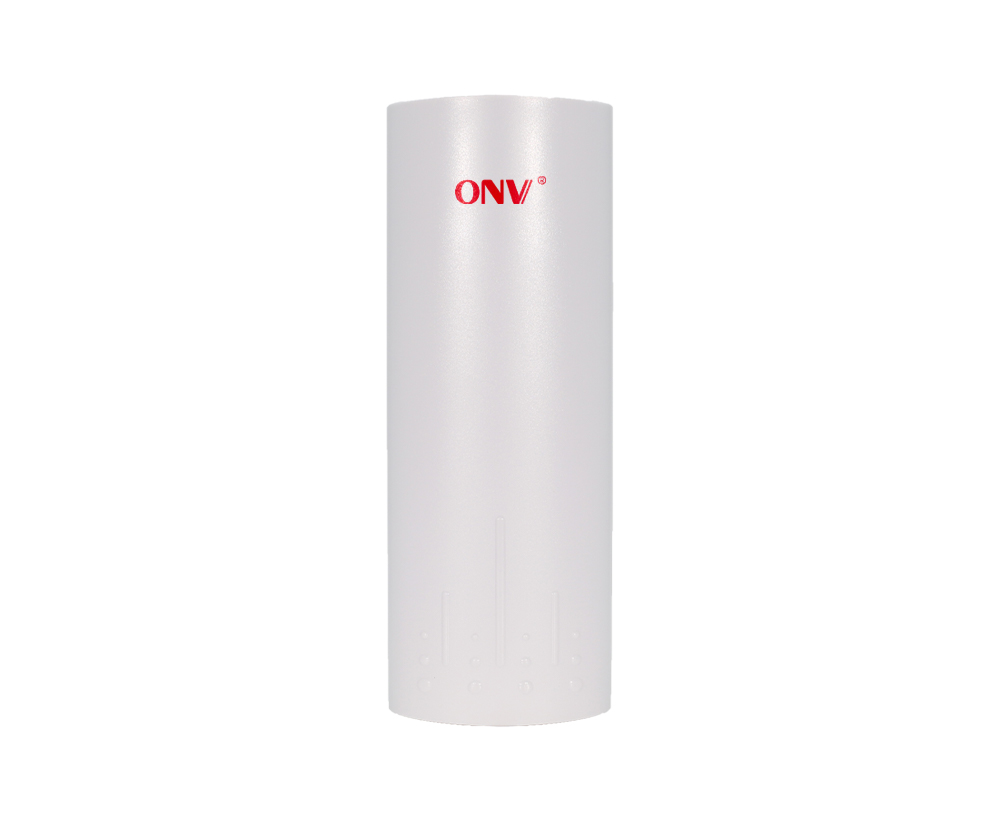
The ONV-WQ300M5805 in datasheet terms: 802.11a/n at 5.8G (4900–6100 MHz), up to 5 km point-to-point or point-to-multipoint transmission, 24V PoE power and a 250 × 95 × 65 mm outdoor body.
| Parameter | Datasheet value |
|---|---|
| Standard | IEEE 802.11a/n, IEEE 802.3u |
| Frequency range | 4900–6100 MHz (antenna system 5180–5825 MHz) |
| Transmission distance | Up to 5 km (point-to-point / point-to-multipoint) |
| Power supply | 24V PoE (default), max 24V |
| Dimensions | 250 × 95 × 65 mm |
| Management | MAC address control supported |
Survey before you buy: walk the path (or model it) for line of sight, Fresnel clearance and interference — 5.8G is cleaner, 2.4G bends a little better around obstructions but shares spectrum with everything. Budget throughput at a fraction of the headline rate under real conditions, and if the link carries cameras, sum their bitrates with headroom. For anything mission-critical or obstructed, price the fiber run too; the bridge wins on speed and cost where the path is clear, and loses honestly where it is not.
Yard-to-building and building-to-building links, remote gates and cameras, temporary and seasonal sites, agricultural and campus coverage — and the Wi-Fi 6 APs cover the indoor last step.
The datasheet states transmission distance up to 5 km — under line-of-sight conditions with the antennas aligned. Obstructions, interference and weather margins all reduce the practical figure; state your distance and path in the inquiry and we will confirm suitability.
Yes — the featured model supports point-to-multipoint: one hub radio serves several remote bridges, sharing its throughput among them. Sum the loads before choosing this over separate point-to-point links.
Send your port count, per-port power and uplink requirements — we reply with the exact models, datasheets and a quotation. MOQ and lead time are confirmed per model and order scope in the quotation.
Bridges inside camera systems.