PoE Switch · Management
Managed PoE switch: control every powered port
Easy managed, L2, L2+ and L3 managed PoE switches — for networks that are operated, monitored and reconfigured, not just installed once.
PoE Switch · Management
Easy managed, L2, L2+ and L3 managed PoE switches — for networks that are operated, monitored and reconfigured, not just installed once.
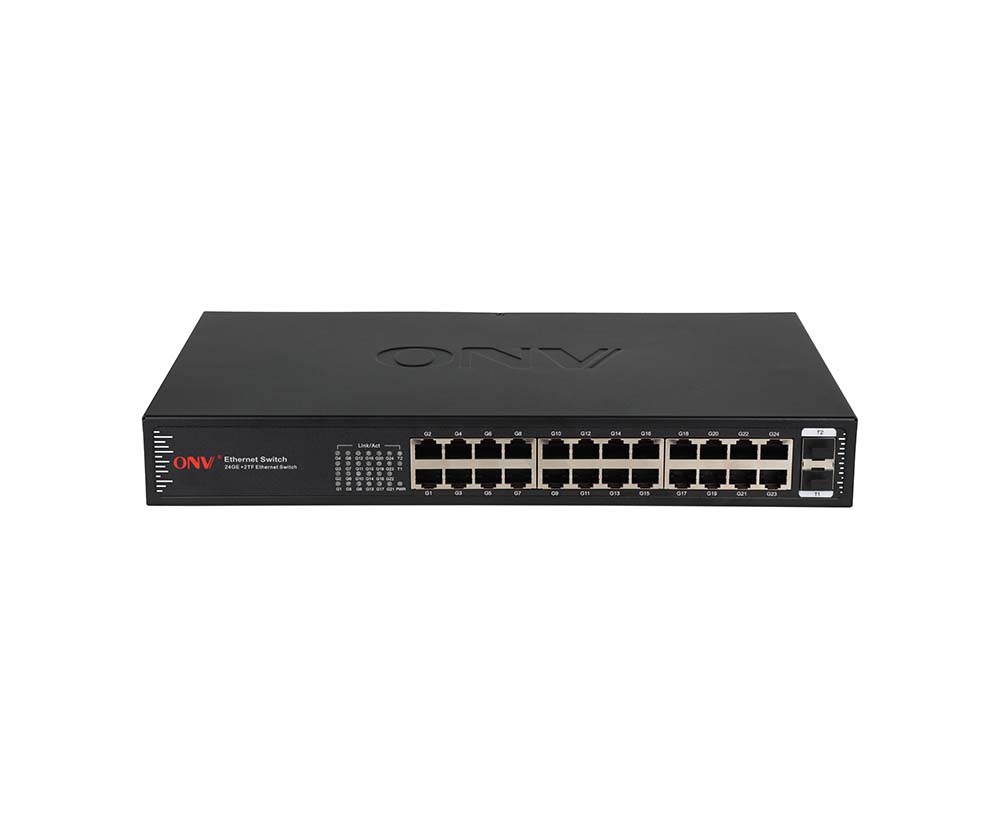
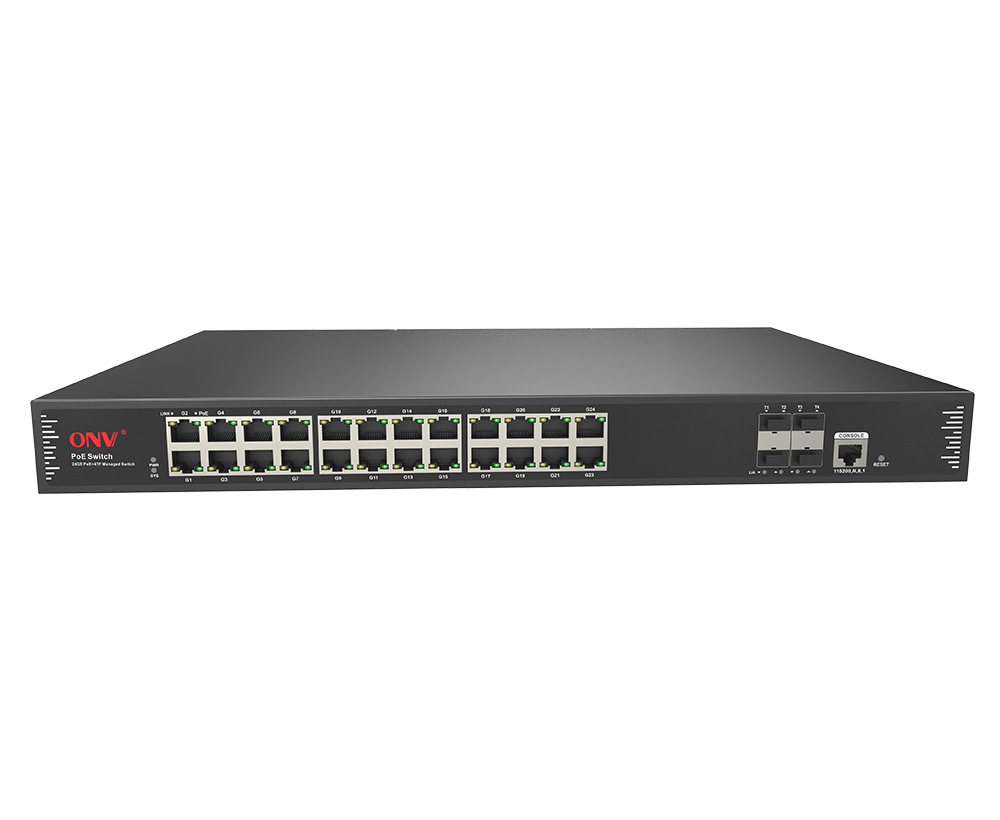
A managed PoE switch adds a control plane to the power plane: VLANs to segment cameras from office traffic, QoS to protect video streams, ring protocols to survive a cut cable, SNMP and web management to see every port, and remote PoE control to restart a camera without sending a technician. ONV's managed PoE range is deep — Easy managed models for light control, L2 and L2+ gigabit models as the mainstream, and an L3 series that routes as well.
The catalogue counts dozens of managed models between 6 and 52 ports, in both the standard and industrial lines. The table below is a cross-section of the L2+ managed gigabit models; the industrial managed range is covered in the industrial sections, and the L3 PoE series has its own page.
Managed models from the PoE switch catalogue (official product names).
| Model | Official product name |
|---|---|
| ONV-POE33018PFM | Gigabit 18-port L2+ managed PoE switch |
| ONV-POE33026PFM | Gigabit 26-port L2+ managed PoE switch |
| ONV-POE33006PFM | Gigabit 6-port L2+ managed PoE switch |
| ONV-POE33020PFM | Gigabit 20-port L2+ managed PoE switch |
| ONV-POE33028PFM | Gigabit 28-port L2+ managed PoE switch |
| ONV-H53054PFDM | Gigabit 6-port Easy managed PoE switch |
| ONV-H53064PFDM | Gigabit 7-port Easy managed PoE switch |
| ONV-H53108PFDM | Gigabit 11-port Easy managed PoE switch |
| ONV-H53168PFMA | Gigabit 16-port Easy managed PoE switch |
| ONV-H53108PFMA | Gigabit 10-port Easy managed PoE switch |
| ONV-POE53028PFCMS | Gigabit 28-port Easy managed PoE switch |
| ONV-POE53020PFCM | Gigabit 20-port Easy managed PoE switch |
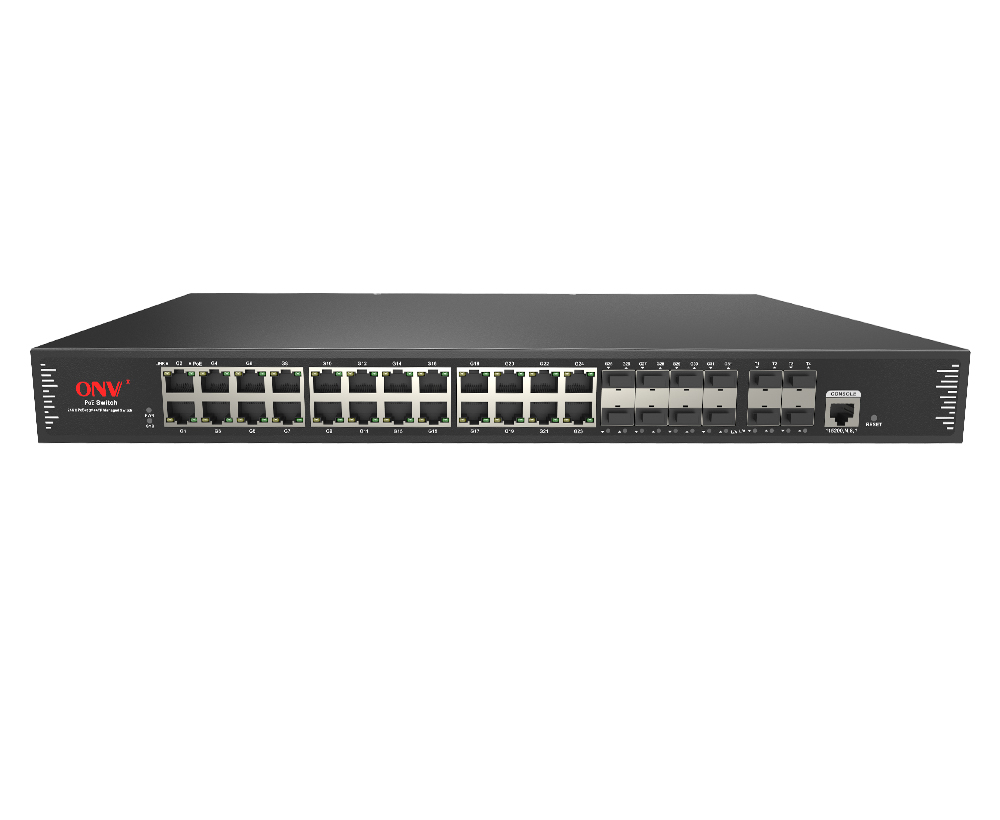
The ONV-POE56052PFM shows the managed flagship pattern: L2+ management, an RS232 console port, 48 PoE ports with 10G uplinks, and a 216 Gbps non-blocking switching capacity — headroom that keeps a full 48-port segment at wire speed.
| Parameter | Datasheet value |
|---|---|
| PoE ports | Port 1–48, IEEE 802.3 af/at |
| Max power per port | 30W |
| Uplinks | 10G uplink ports (52 ports total) |
| Switching capacity | 216 Gbps (non-blocking) |
| Forwarding rate | 131 Mpps @64byte |
| MAC address table | 32K |
| Buffer memory | 16M |
| Console | 1 × RS232 console port |
| Standards | IEEE 802.3 / 802.3u / 802.3ab / 802.3z / 802.3ae 10GBase-LR/SR / 802.3x |
Choose the management tier by who touches the network after installation. If the answer is 'nobody, unless something breaks', Easy managed is enough. If an IT team or integrator operates the network — segmenting traffic, monitoring links, cycling PoE remotely — step to L2+. Choose L3 when the switch must also route between VLANs or sites, which removes a separate router from the design. The managed vs unmanaged guide compares the tiers feature by feature.
Managed PoE is the default for campuses, hospitals, hotels, smart buildings and any surveillance network with a maintenance contract — anywhere downtime has a cost and remote diagnosis saves site visits.
Yes — per-port PoE control is a standard managed feature: an operator can cycle power to one port from the web interface or SNMP, which clears most frozen-camera faults without a site visit. The unmanaged AI watchdog models automate the same recovery.
L2+ handles switching, VLANs and static routes in most building networks. L3 adds dynamic routing and inter-VLAN routing at scale — needed in campus cores and multi-building designs. See the L3 PoE page for the routing series.
Send your port count, per-port power and uplink requirements — we reply with the exact models, datasheets and a quotation. MOQ and lead time are confirmed per model and order scope in the quotation.
The full comparison.